



Table of Contents
A fisherman’s son recalls the days when the Red River was his entire world.
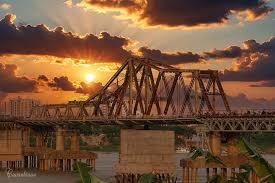
At sunrise, the Red River turns the color of warm amber—soft, hazy, and alive. For generations, it has been more than a river to Hanoi’s riverbank families; it is a cradle, a livelihood, and a quiet teacher. For Nguyễn Văn Dũng, now 47, the Red River is also the keeper of his childhood. Born on a floating wooden house near Long Biên Bridge, he carries within him a lifetime of memories shaped by tides, storms, and the gentle rhythm of a river town that few Hanoians ever see.
“People think the river is wild,†DÅ©ng says, sitting on the low deck of his family’s boat, now moored permanently near Bãi Giữa. “But to us, it was home.â€
A Childhood on Water
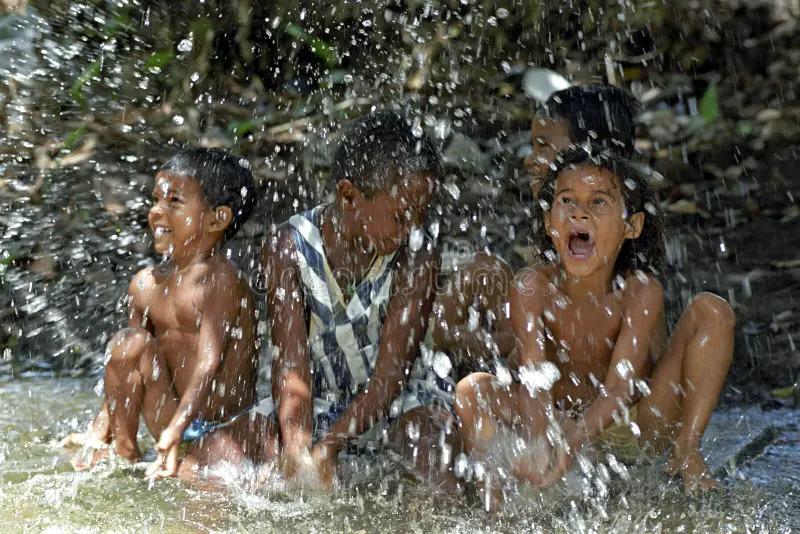
DÅ©ng grew up in the 1980s, when communities of floating houses—clusters of wooden rafts, tin roofs, waterlogged planks—lined the riverbank from ChÆ°Æ¡ng DÆ°Æ¡ng to Nháºt Tân. His earliest memory is the rocking of the boat late at night. “It felt like my mother was always gently shaking me to sleep,†he laughs.
Life on water required balance—literally. Children learned to walk on narrow planks before they ever stepped onto dry land. Dũng remembers how his mother tied a small rope around his waist when he played outside. “If I fell in, she’d pull me back up like catching a fish,†he says, smiling at the memory.
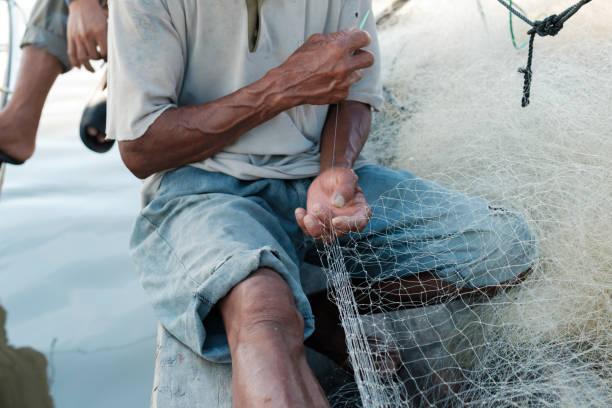
Every morning, the river community came alive. Women washed clothes on bamboo platforms. Men prepared nets, checking every knot by hand. Children scooped water into small plastic boats and pretended to be fishermen themselves. The river, warm in the summer and brown in the rainy months, was both playground and danger, teacher and test.
“You learn respect for the water,†DÅ©ng says. “It gives you life, but it can take it away anytime.â€
The Fisherman’s Routine
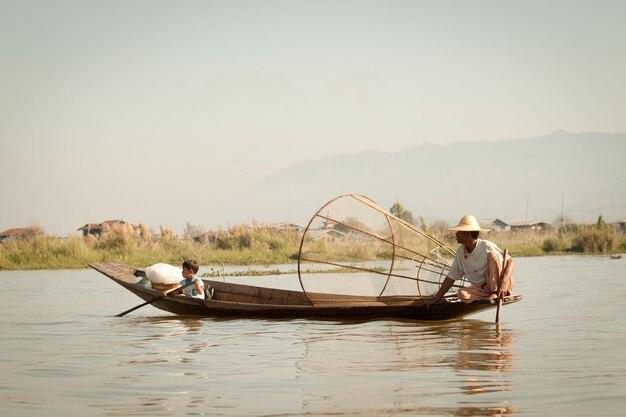
By age seven, Dũng was joining his father on dawn fishing trips. Their wooden boat—repaired countless times with patches of tin and nails—glided silently across the morning fog. He remembers the sound of oars slicing through water, the river birds calling from the reeds, and his father’s steady voice pointing out where the fish might be hiding.
His father taught him the old techniques:
- how to read the ripples on the water,
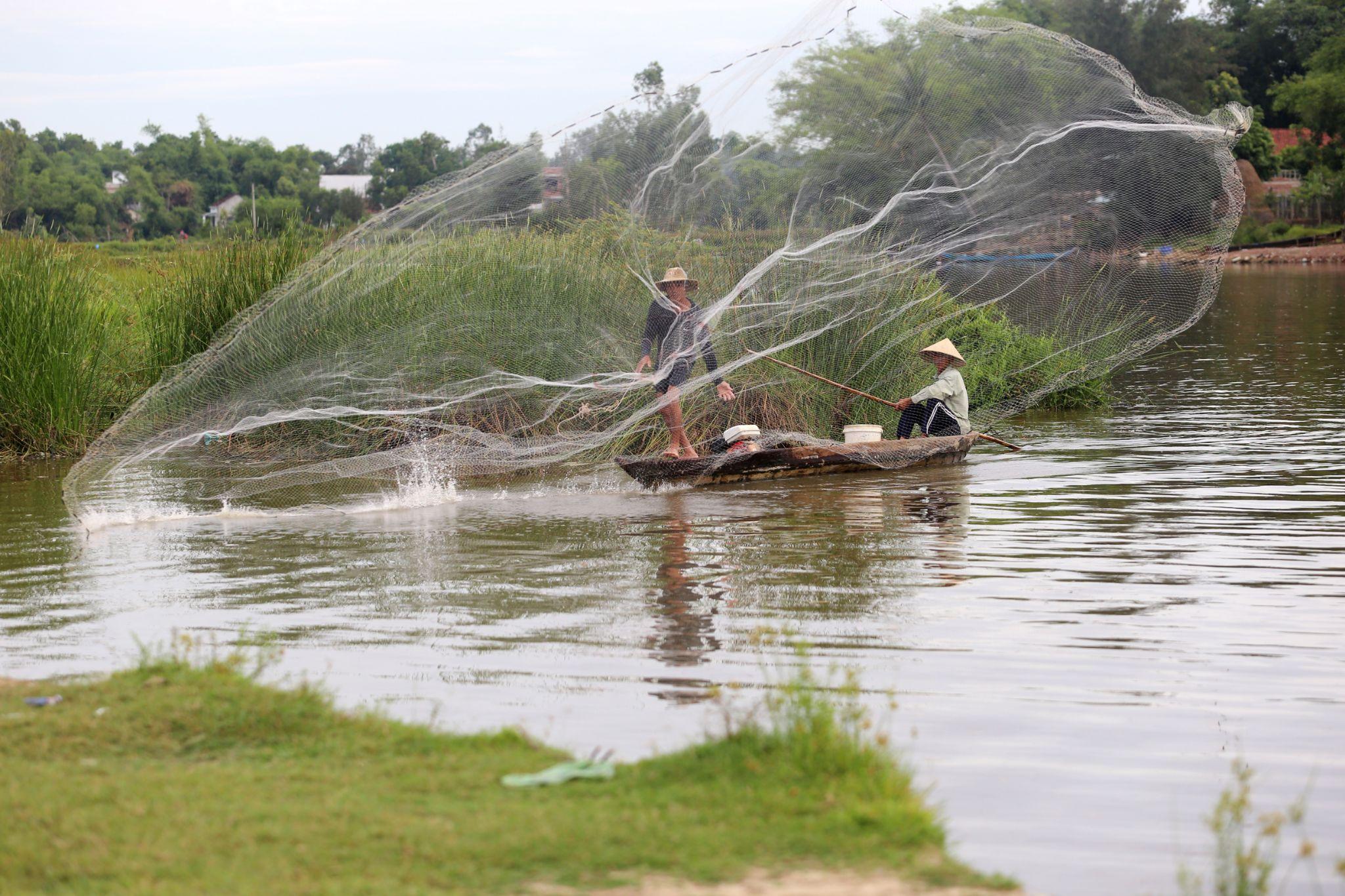
- when to cast the round net,
- how to fix a hook with fingers numb from the cold.
“Fishing is not just a job,†his father used to say. “It’s listening.â€
Some days were abundant: buckets full of carp, tilapia, and river shrimp. Other days, they returned home with almost nothing. The river decided.
Back then, fishermen sold their catch directly along the riverbanks. DÅ©ng remembers sprinting up the muddy slope with fresh fish dangling from his fingers, calling out to early-morning shoppers. The old ladies of Long Biên Market became familiar faces, praising his “river fish eyesâ€â€”a joking reference to how river kids squinted in the sun.
Seasons of Hardship
Life on the Red River was never easy, especially during the monsoon season. When the water rose, it rose fast. Families would untie their boats and move to safer areas, sometimes spending weeks drifting until the flood receded.
Dũng remembers one flood in 1986 vividly. The water swallowed the entire riverbank, lifting their home like a toy boat. The current pushed them toward pillars of the Long Biên Bridge. His father paddled desperately while his mother held the children under blankets to keep them dry.
“That night, I thought the river was angry,†DÅ©ng says quietly. “But my father said, ‘It’s just doing what rivers do.’â€
Even in hardship, the community supported each other. Families exchanged rice, shared drinking water, and repaired boats together. The river people formed a tight bond, united by survival and simplicity.
The Magic of River Markets
One of Dũng’s happiest memories is the early-morning scene at Chợ Tạm Bãi Giữa, the temporary riverside market that popped up whenever the water was low. Women would sit on low stools selling river mussels, morning glory bunches still wet with dew, baskets of bamboo shoots, and freshly caught fish displayed on beds of crushed ice.
The air smelled of river mud, grilled corn, and wood smoke. Children ran barefoot between stalls. Fishermen shouted friendly jokes at each other. The world above the riverbanks—bustling, noisy Hanoi—felt distant. Hidden.
“People think poor life is sad,†DÅ©ng says. “But my childhood was full of laughter.â€
Leaving the River—and Finding It Again
By the late 1990s, many river families moved to the mainland as the city modernized. Schools required stable addresses, new regulations restricted living on boats, and the younger generation sought jobs beyond fishing.
At 19, DÅ©ng left to work in construction. He still returned often to visit his parents, who lived on the river until they grew too old to maintain the boat.
When his father passed away in 2014, Dũng returned to the river more often—“to hear his voice in the water,†he says. A few years ago, he bought a small fishing boat, not because he needed the income, but to reconnect with his roots. Now, on weekends, he takes his own son out to cast nets, continuing the tradition.
“My boy won’t grow up like I did,†DÅ©ng admits. “But at least he’ll know where our family came from.â€
The River Today
Much has changed. The floating villages are smaller. Pollution threatens the fish populations. Children no longer learn to walk on swaying planks. But the Red River remains a quiet world within Hanoi—a reminder of a simpler time.
Every sunrise still paints the water gold. Fishermen still set out before dawn. And if you walk along the sandy banks near Long Biên Bridge, you may see Dũng casting his net in slow, graceful arcs.
“When the net flies, it carries my whole childhood,†he says.
For him, the Red River is not just geography—it is memory, identity, and home.