



Table of Contents
Because eating in Vietnam is not just about what you order — it’s about where you sit.
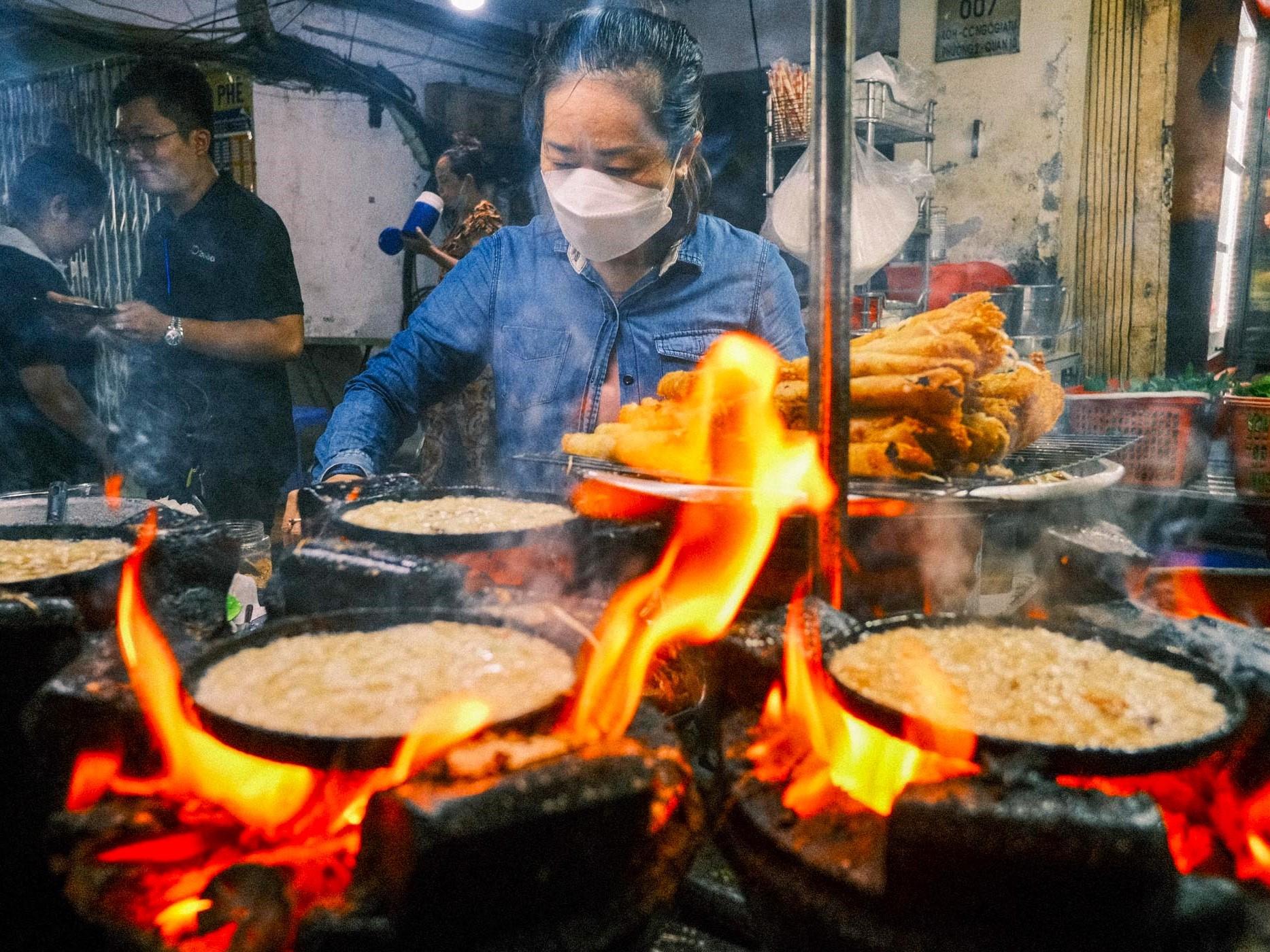
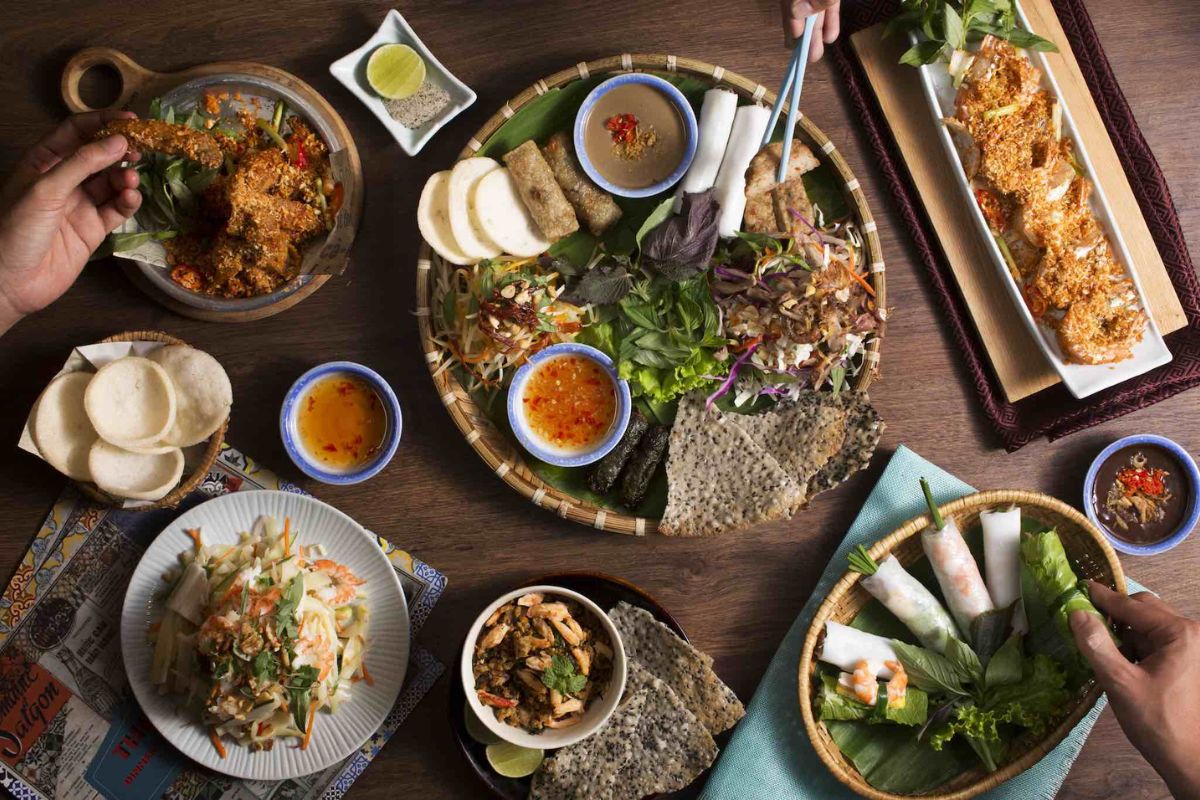
In Vietnam, people don’t ask each other, “Have you eaten yet?” out of politeness. They mean it literally. Food is the heartbeat of the country — the morning rhythm of a street corner, the smell of broth drifting through an alley, the sizzling sounds from a sidewalk grill. Every region carries its own flavors, and every city hides places where locals return again and again.
This guide doesn’t send you to the famous spots already on every blog. Instead, it takes you to the tables where real Hanoians, Saigonese, and Central Vietnamese actually eat — the places with no English menus, the shops you’d miss unless a local brought you there.
Let’s dive in.
1. Phở (Hanoi)
Phở is the quiet soul of Hanoi — a dish built on patience. The best broths are made by simmering beef bones, grilled onions, ginger, cinnamon, star anise, and cardamom for at least 10–12 hours. No shortcuts. No over-flavoring. The result is a broth that looks clear but tastes deep, layered, slightly sweet, and incredibly clean.
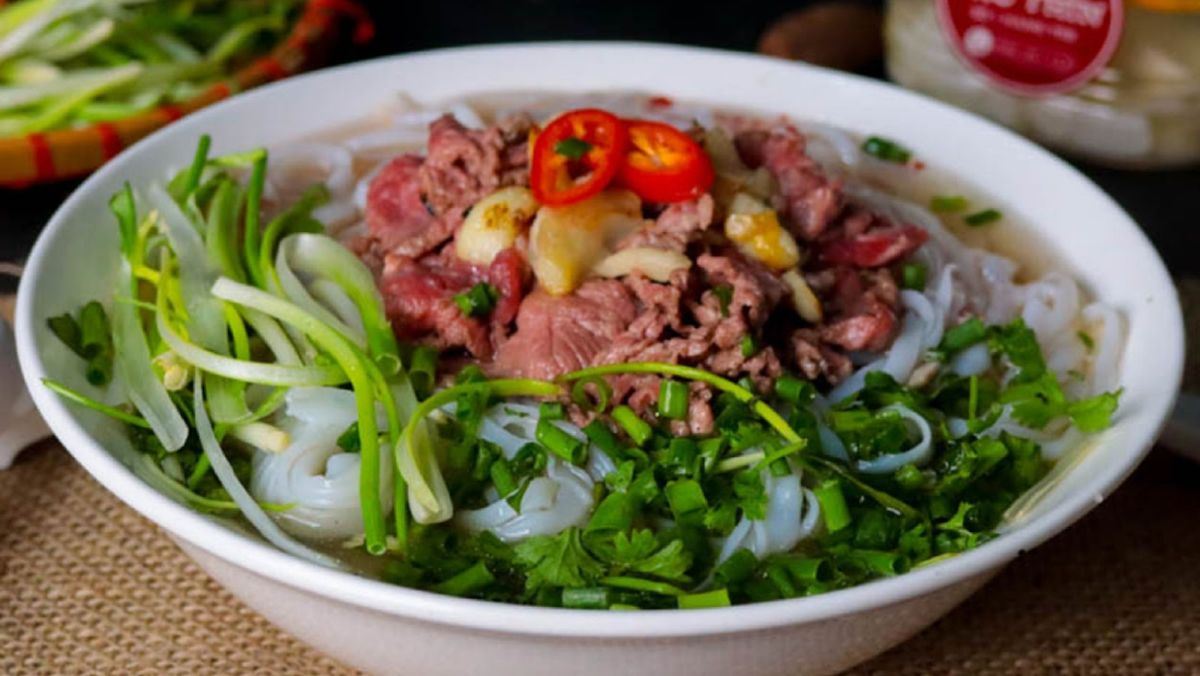
In Hanoi, phở is a morning ritual. Locals eat it standing by the street, dipping pieces of quẩy (fried dough sticks) into steaming soup before rushing off to work. Each shop has its own “family fingerprint” — a secret way of balancing salt, umami, and aromatics.
Local spots:
- Phở Thịnh, 49 Tôn Đức Thắng (old-school, rich broth)
- Phở Sướng, Đinh Liệt (locals’ late-night favorite)
2. Bún Chả (Hanoi)
Bún chả is all about fire. Pork belly and pork patties are marinated in fish sauce, sugar, garlic, and shallots, then grilled over coconut-shell charcoal — the type that burns hot and clean, creating a signature smokiness.
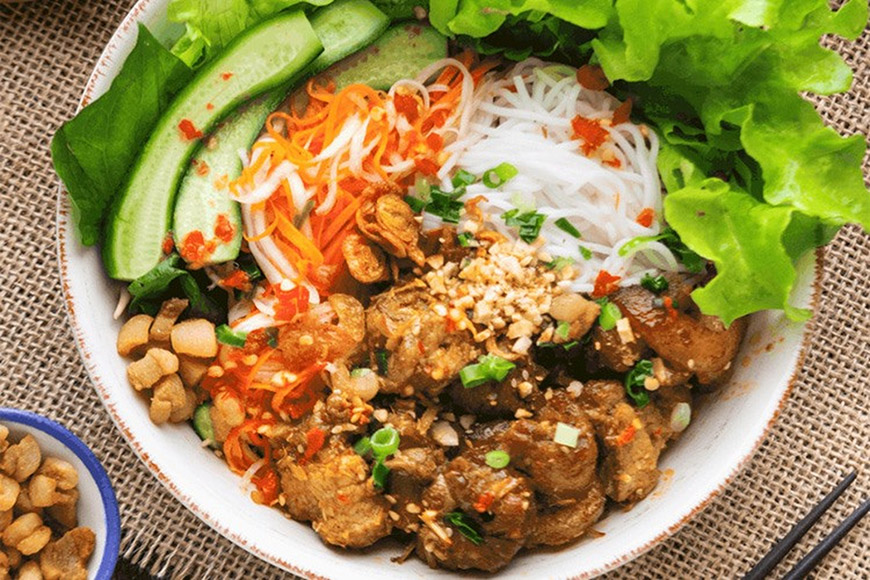
The dipping sauce is warm, slightly sweet, slightly sour, overflowing with green papaya slices. Locals never drink the sauce like broth — instead, they dip noodles, herbs, and meat separately to control each bite.
Bún chả is always eaten at lunchtime. If a shop serves it in the evening… it’s not a local shop.
Local spots:
- Bún Chả Đắc Kim, Hàng Mành
- Bún Chả 74, Hàng Quạt (small, crowded, authentic)
3. Bánh Mì (Central Vietnam)
Vietnam’s bánh mì is the world’s crunchiest sandwich — not because of the filling, but because of the airiest, thinnest baguette crust. Central Vietnam is the master of this: Hội An and Đà Nẵng bake loaves that shatter like glass when you bite into them.
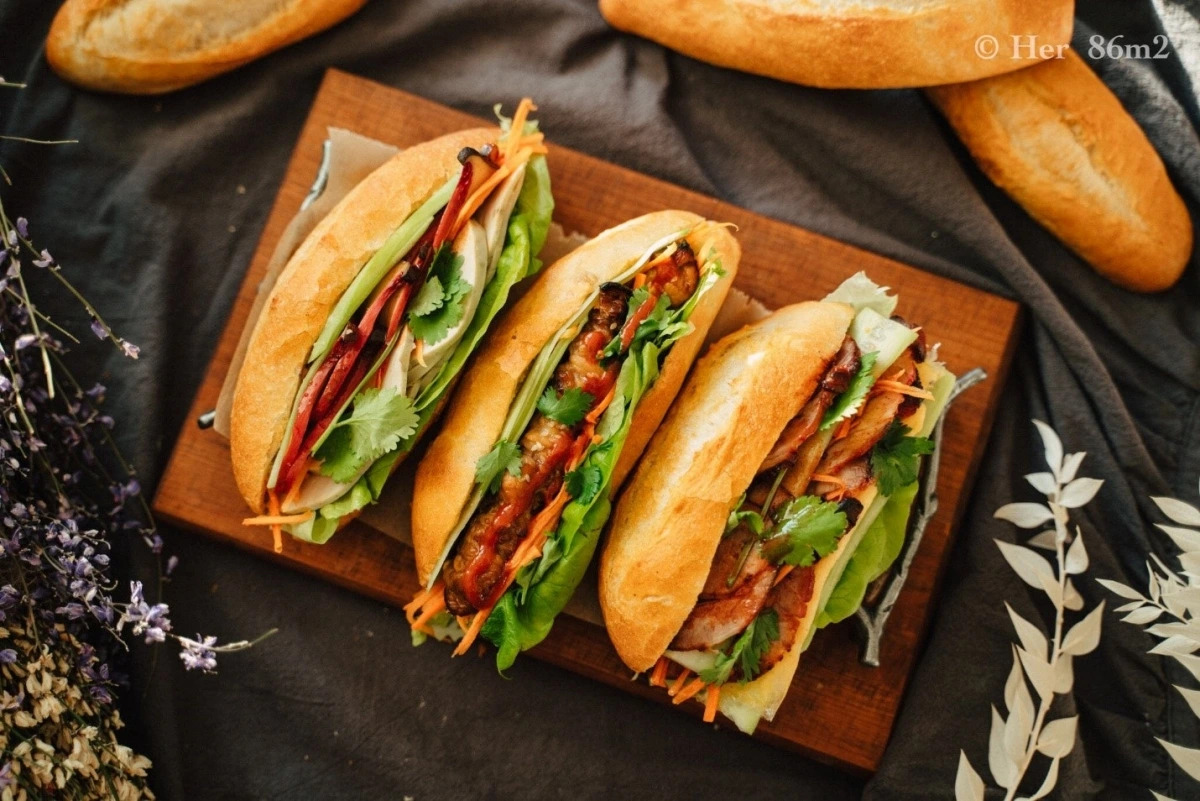
Fillings depend on region — from Hội An’s chili-jam-and-paté combo to Saigon’s sweet pickles and Chinese-style char siu.
A true local bánh mì has:
- freshly baked bread every hour
- homemade pâté
- a balanced sauce (not too wet!)
- a sprinkle of crispy shallots
And no tourist-trap cucumbers.
Local spots:
- Bánh Mì Phượng, Hội An
- Bánh Mì Đồng Tiến, Danang (locals’ everyday choice)
4. Bún Bò Huế (Huế)
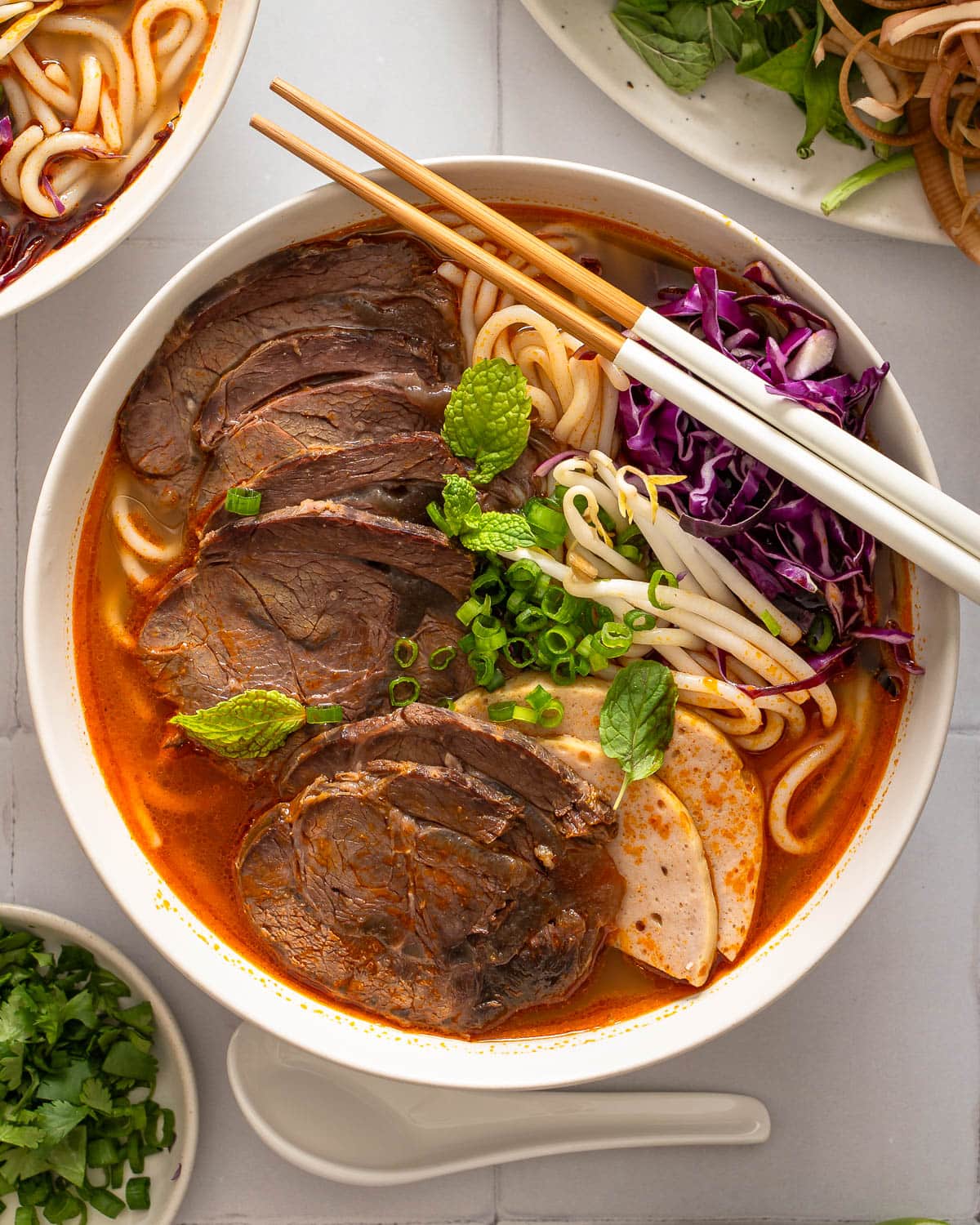
This dish carries royal DNA. Created in the old imperial kitchens, it is bold and refined at the same time. The broth is a symphony of:
- lemongrass
- shrimp paste
- slow-simmered beef bones
- chili oil
The noodles are thick and round, different from phở. Toppings include beef shank, crab sausage (chả cua), and sometimes pig’s knuckles.
Locals in Huế insist:
“If it doesn’t slap you with lemongrass and shrimp paste, it’s not bún bò Huế.”
Local spots:
- Bún Bò Huế O Phụng, Huế
- Bún Bò Huế O Cương Chú Điệp, Huế
5. Cao Lầu (Hội An)
Cao Lầu noodles are made only in Hội An, using water drawn from the ancient Bá Lễ well. The noodles are soaked in lye from local wood ash, giving them their signature chewiness — almost like Japanese udon, but firmer.
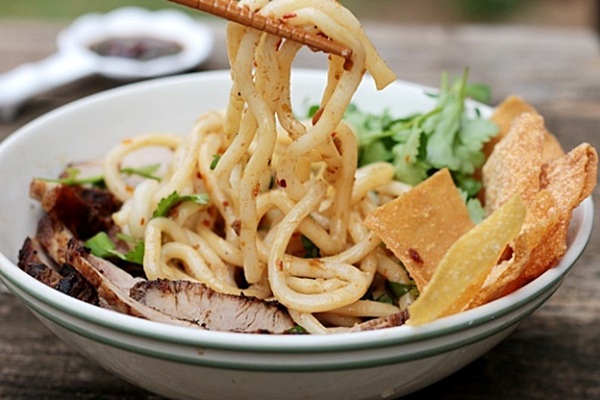
The dish itself is not a soup; it’s a mix of noodles, greens, pork char siu, bean sprouts, and crispy rice crackers, drizzled with a very small amount of broth.
It reflects Hội An’s old trading port past — Chinese-style noodles, Japanese technique, Vietnamese herbs.
Local spots:
- Cao Lầu Thanh, Hội An
- Cao Lầu Liên, Hội An
6. Mì Quảng (Quảng Nam / Danang)
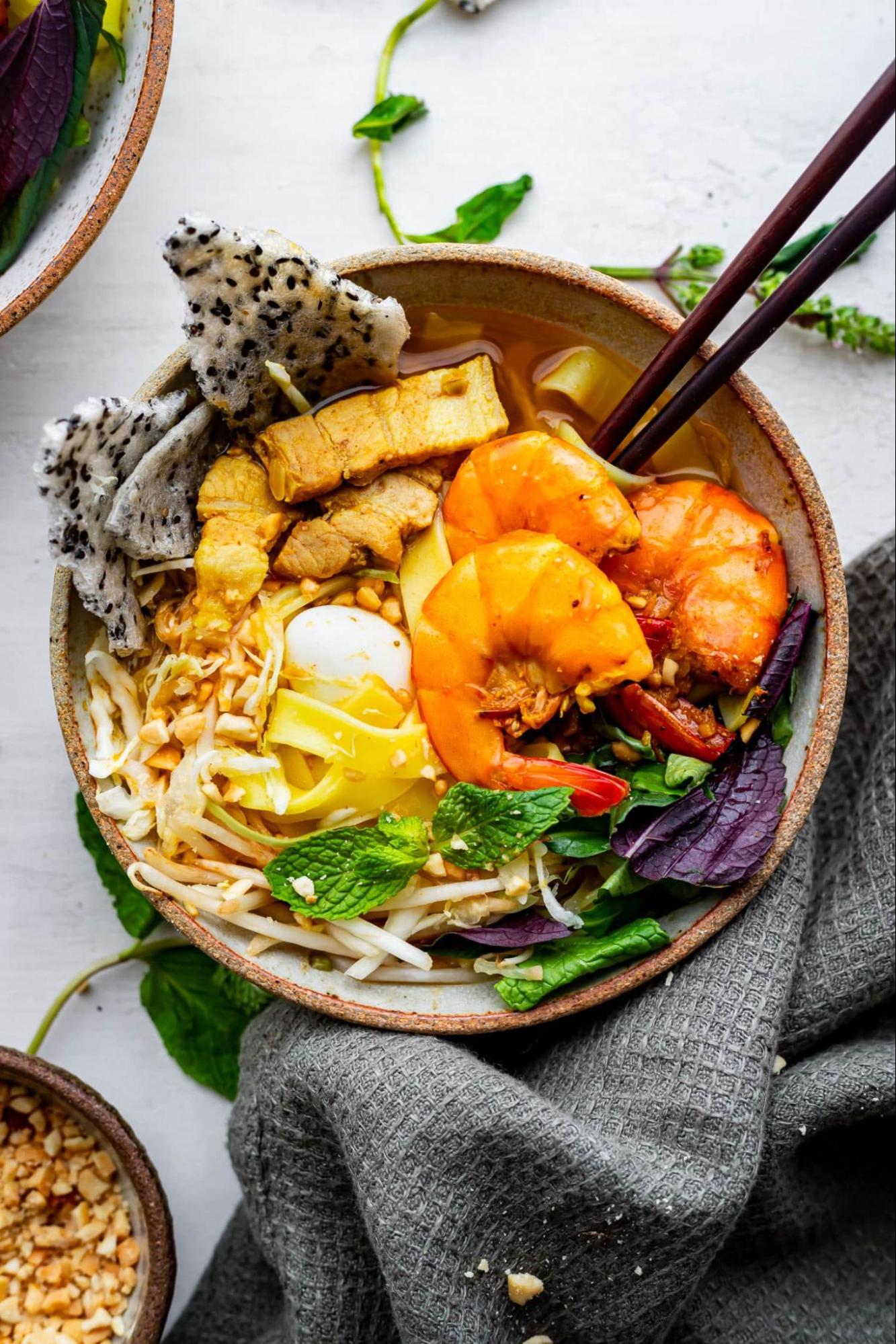
Mì Quảng isn’t meant to be soupy. It’s a dish of edge and textures:
- turmeric-yellow noodles
- a ladle of rich broth
- roasted peanuts
- grilled rice crackers
- fresh herbs
- shrimp, pork, or frog
Locals say mì quảng represents the Central Vietnamese spirit:
simple ingredients, rich flavors, and a little crunch to survive hard times.
Local spots:
– Mì Quảng Bà Mua, Danang
– Mì Quảng 1A, Danang
7. Cơm Tấm (Saigon)
Cơm tấm started as food for the poor — farmers who salvaged broken grains of rice. Today, it’s Saigon’s city breakfast, eaten by construction workers, office staff, and students alike.
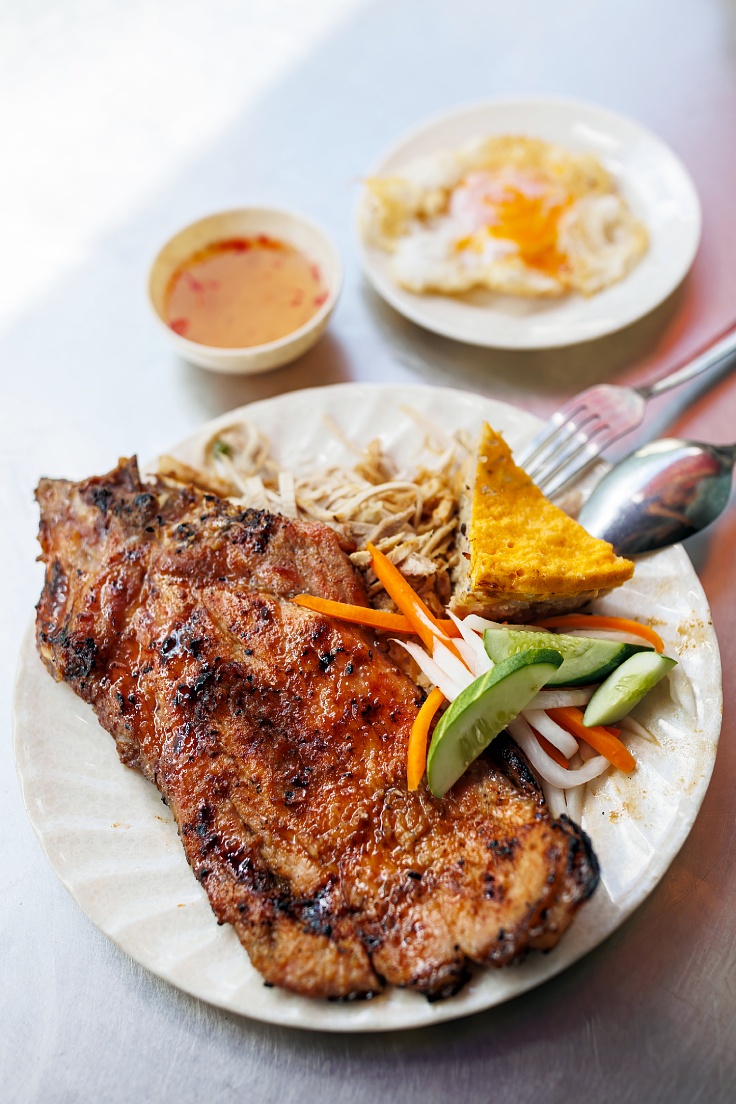
A proper plate has:
- smoky grilled pork chops
- shredded pork skin
- steamed egg cake (chả trứng)
- fish sauce
- pickles
- a dollop of scallion oil
The magic lies in the marinade: fish sauce, garlic, honey, lemongrass. When grilled over charcoal, it creates a glaze that caramelizes into a perfect crust.
Local spots:
– Cơm Tấm Ba Ghiền, Phú Nhuận
– Cơm Tấm Ngô Quyền, District 5
8. Hủ Tiếu (Saigon + Mekong Delta)
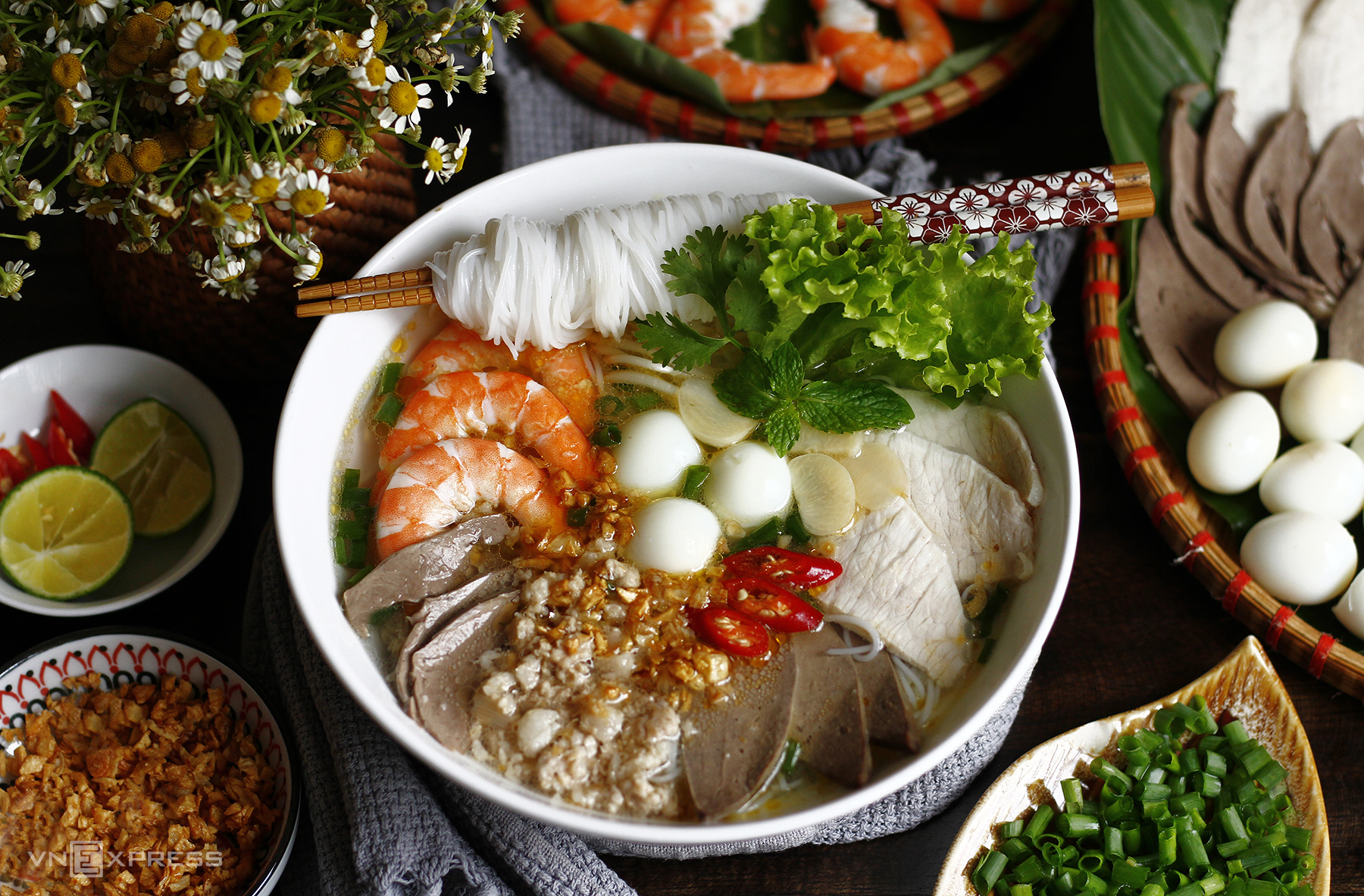
Hủ tiếu is Saigon’s lighter, sweeter answer to phở. The noodles can be:
- hủ tiếu dai (chewy)
- hủ tiếu mềm (soft)
- hủ tiếu trứng (egg noodles)
The broth is clearer and brighter, often pork-based with Chinese and Khmer influences. South Vietnamese people love customizing:
- more garlic
- more chili vinegar
- more bean sprouts
Hủ tiếu is eaten at dawn — the first bowl of the day.
Local spots:
– Hủ Tiếu Hồng Phát, District 3
– Hủ Tiếu Nam Vang Nhân Quán, District 10
9. Bún Riêu (Hanoi & Saigon)
The broth is made from freshwater crab paste, tomatoes, and annatto oil, giving it a reddish color. Each region has its twist:
- Hanoi: lighter, tangier, more tomato flavor
- Saigon: richer, more toppings, sweeter broth
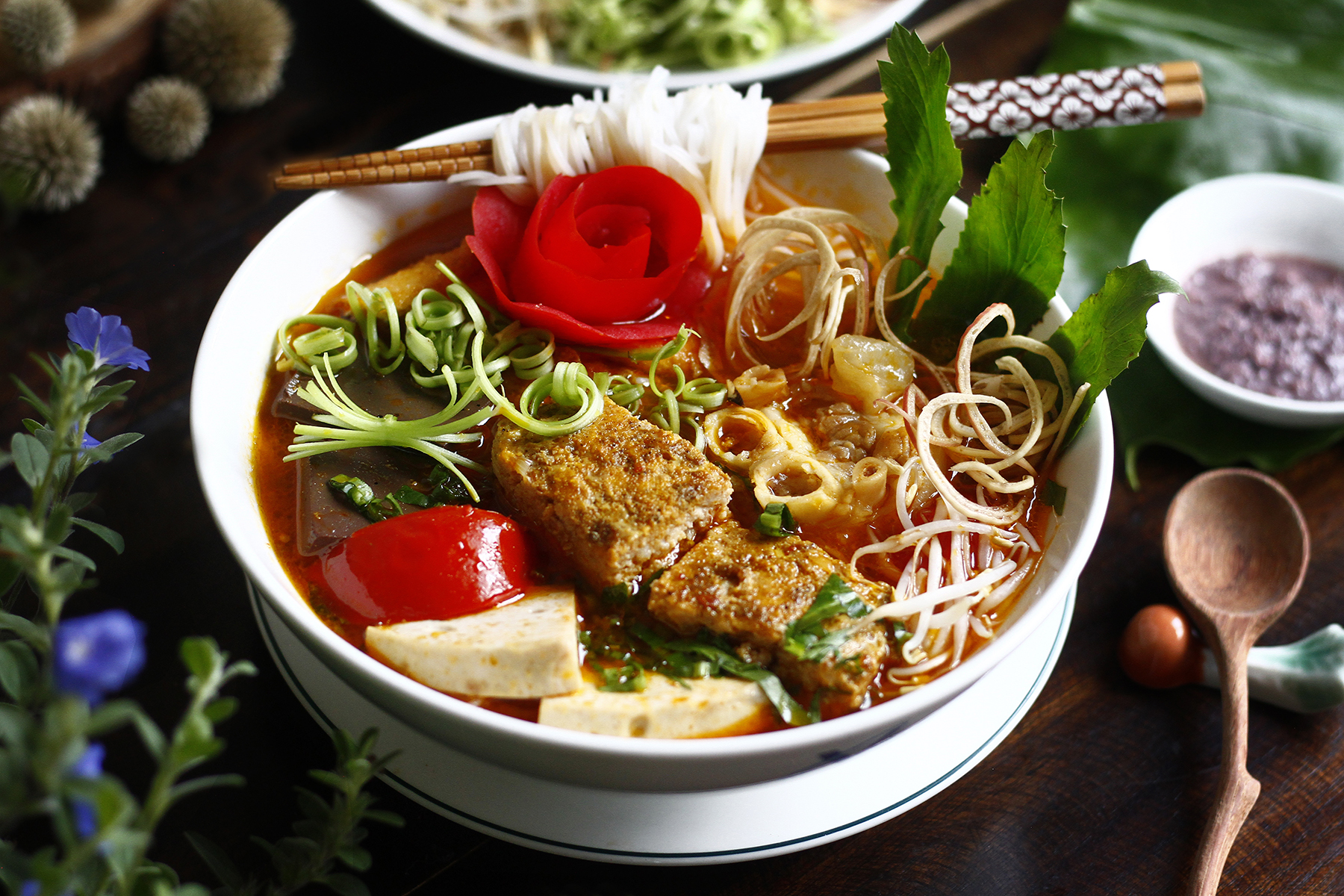
Typical toppings:
- crab roe
- tofu
- snails
- blood pudding
- fresh herbs
Bún riêu is the taste of Vietnamese summer — sour, light, refreshing.
Local spots:
– Bún Riêu Quang Trung, Hanoi
– Bún Riêu Gánh, Saigon
10. Bánh Cuốn (Hanoi)
This dish is culinary craftsmanship. A thin sheet of rice batter is steamed on a cloth stretched over boiling water. The cook gently lifts it with a bamboo stick — a movement so precise it takes years to master.
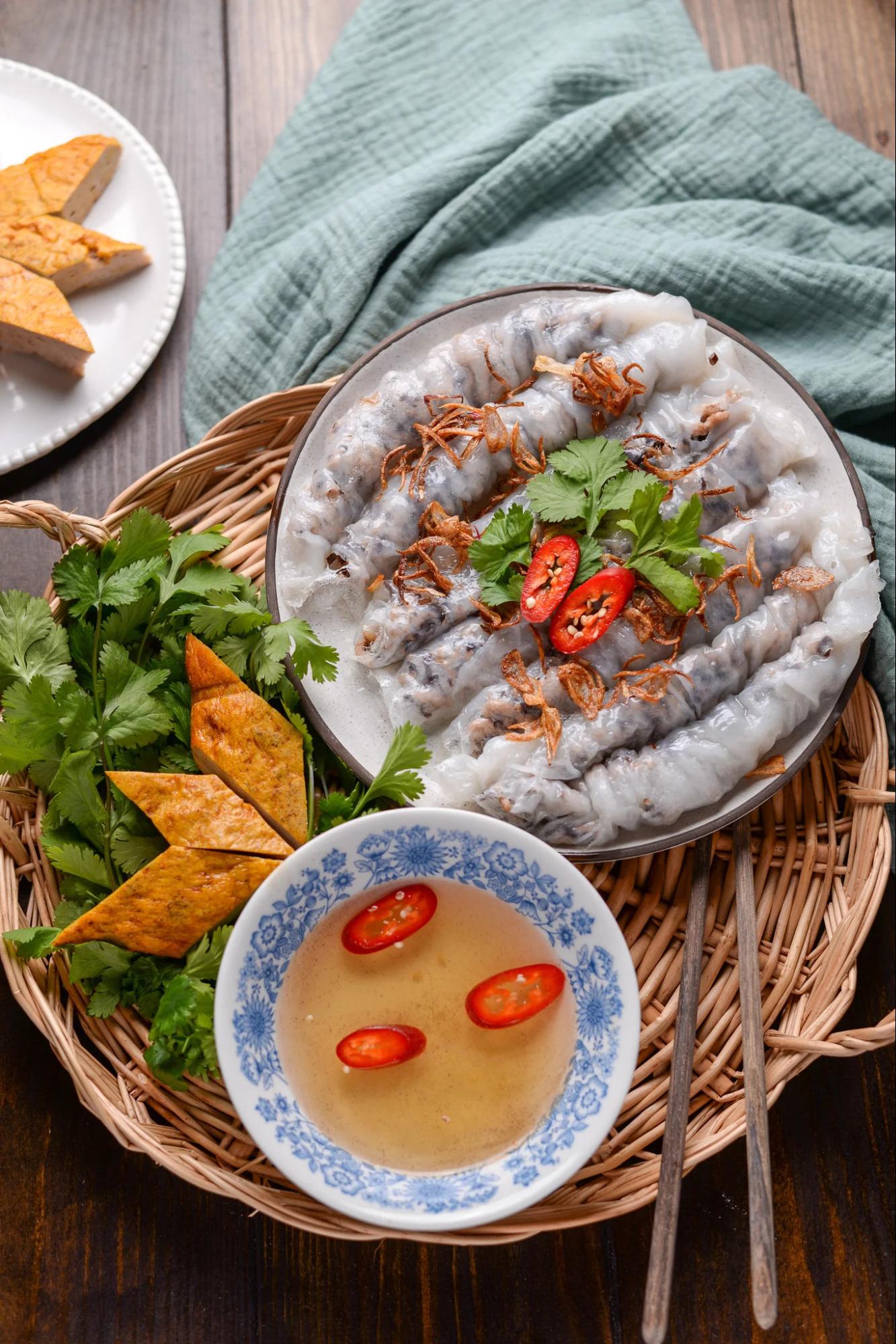
The filling is simple: minced pork and mushrooms. But the dipping sauce, with fragrant hot nước mắm, is what makes you come back for more.
Locals eat bánh cuốn with chả quế (cinnamon pork sausage) for breakfast.
Local spots:
– Bánh Cuốn Bà Hoành, Thanh Trì
– Bánh Cuốn Bà Hanh, Hàng Gà
11. Chả Cá Lã Vọng (Hanoi)
There is nothing like this dish anywhere else in the world.
Turmeric-marinated fish is fried with mountains of dill and scallions until fragrant. It is served with:
- rice noodles
- roasted peanuts
- fish sauce
- fermented shrimp paste (optional but traditional)
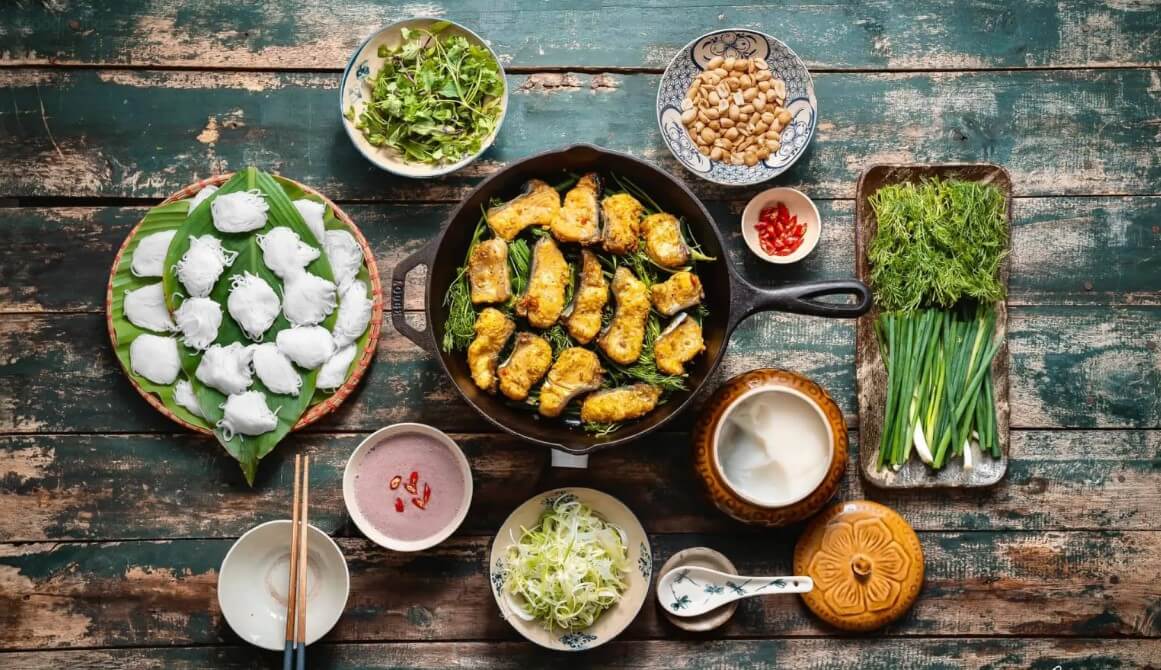
Touristy restaurants serve the dish too oily — locals choose smaller shops run by real Hanoi families who’ve served the dish for generations.
Local spots (non-touristy):
– Chả Cá Hà Thành, 20 Nguyễn Văn Huyên
– Chả Cá Lao Ngư, Đống Đa
12. Bún Thịt Nướng (Hue + Saigon)
Fresh, fragrant, and endlessly customizable.
Grilled pork is marinated in lemongrass, garlic, and sugar, then cooked over charcoal. The bowl combines:
- herbs (Vietnam’s treasure)
- peanuts
- pickles
- rice noodles
- fish sauce
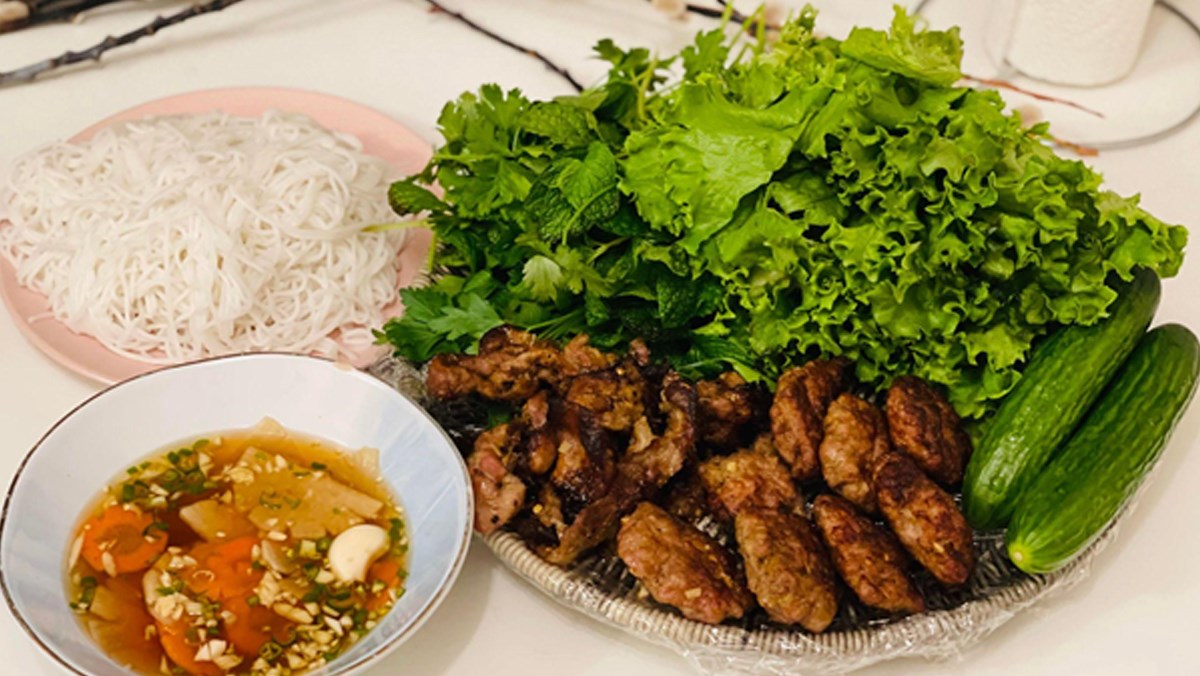
Hue’s version is spicier; Saigon’s is sweeter and more generous. It’s a perfect “Vietnam in one bowl” dish.
Local spots:
– Bún Thịt Nướng Chị Mai, Hue
– Bún Thịt Nướng Chị Tuyền, Saigon
Conclusion
Eating in Vietnam is not about following a checklist — it’s about sitting on a plastic stool at a place locals trust. It’s the smoke on your clothes, the clatter of chopsticks, the stories behind every bowl.
At Earthy Travel, we believe in slow travel — tasting a city the way its people do. So let this list be your first step into the Vietnam we know, love, and grew up with.