



Table of Contents
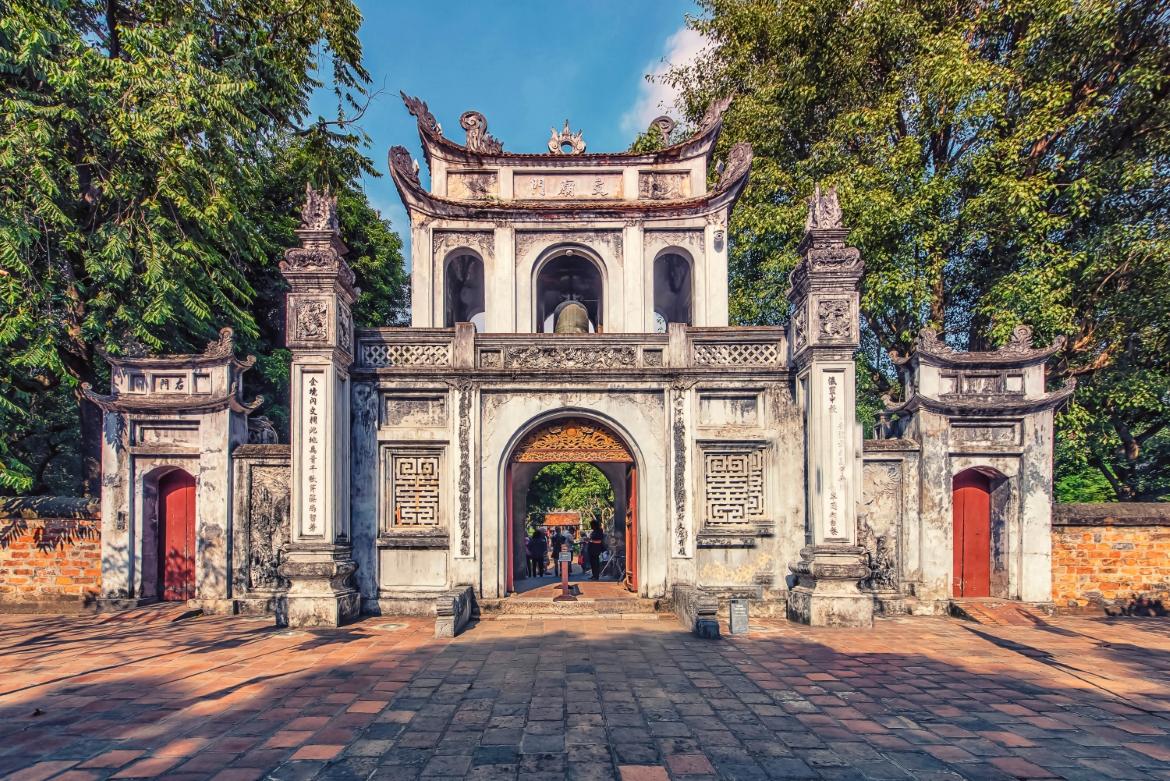
When dawn breaks over the ancient gates of the Temple of Literature, narrow shafts of light filter through age‑worn roof tiles, brushing against red‑and‑yellow sheets of paper spread across simple wooden tables. Nearby, a row of bamboo tents sways slightly in the morning breeze, and the soft scratch of a brush on paper — black ink meeting silk‑thin do paper — echoes quietly under the shadows of century‑old trees.
This is no ordinary moment. This is the world of calligraphers at Văn Miếu-Quốc Tử Giám — the heart of Vietnam’s scholarly past, now home to a living tradition of brush, ink, and wishes.
A thousand years of reverence for letters
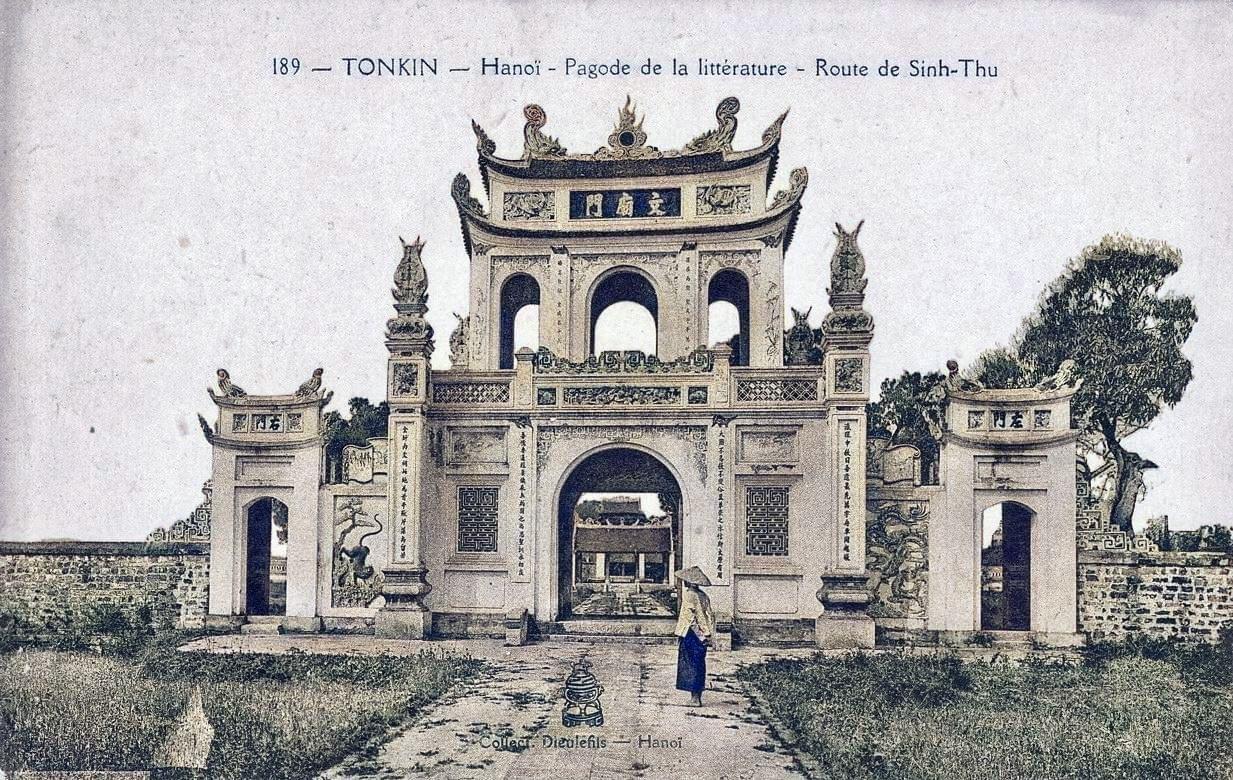
Founded more than 900 years ago, Văn Miếu‑Quốc Tử Giám was Vietnam’s first national university, a cradle of scholars who studied Confucian classics, poetry, and literature. Through the centuries, its courtyards, steles, and silent halls stood as a testament to learning, honor, and the power of the written word.
Today, that legacy lives on not only in the mossy stones and ancient architecture — but in the ink‑dark strokes of calligraphy flowing from brush to paper, each character a bridge between past and present.
What is Vietnamese calligraphy — a craft of history and heart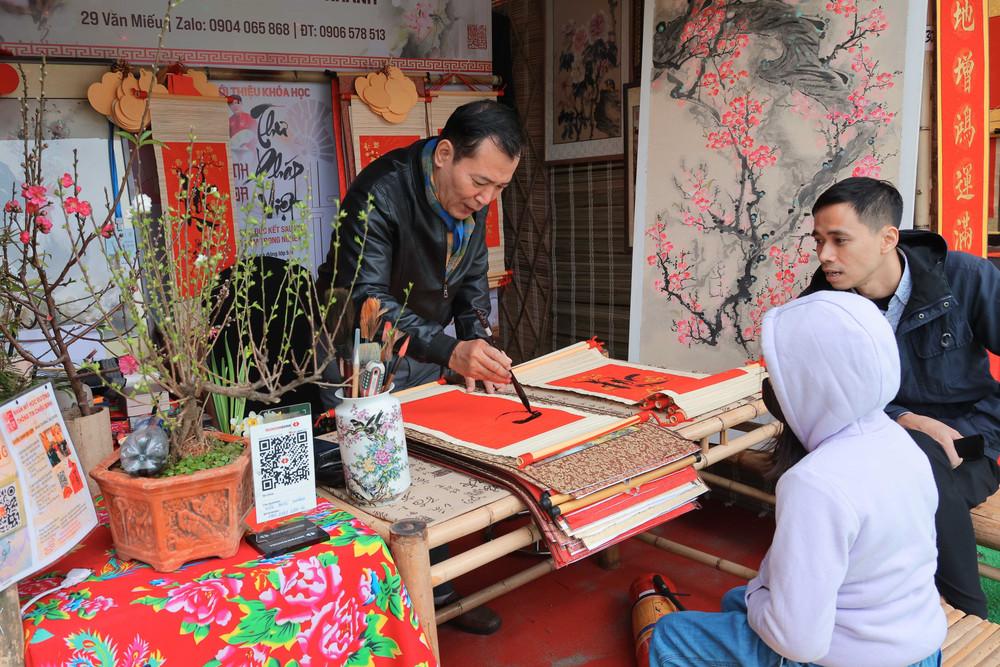
Thư pháp Việt Nam (Vietnamese calligraphy) traces its roots to classical scripts — Hán and Nôm — once used widely in literature and administration. Even as the modern Latin alphabet became dominant, calligraphy retained a special place in Vietnamese culture: an art form, a reverence for tradition, a poetry of form and meaning.
At Văn Miếu, this art is alive. Each brushstroke demands patience, concentration, and respect for form. The calligrapher isn’t just writing a word — they’re inscribing a wish, a memory, a hope.
A day in the life of a calligrapher
In spring — especially around the Lunar New Year (Tết) — or during regular weekends, the temple’s grounds transform into a “writing street.” Bamboo tents spring up along paths or around Văn Lake. Under soft light, calligraphers — often in traditional attire — sit before ink stones and brushes, waiting.
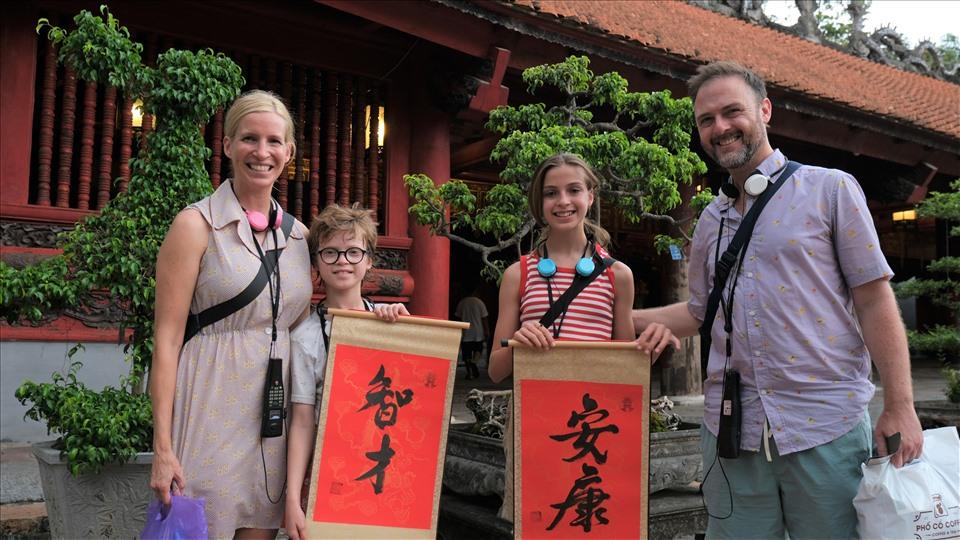
Visitors — locals and tourists alike — approach them with requests: a word for luck, health, prosperity; something for success in studies; a scroll for home or a gift. The calligrapher listens to the wish, then selects a character: maybe “Phúc” (福 — fortune), “Tài” (才 — talent), or “An” (安 — peace).
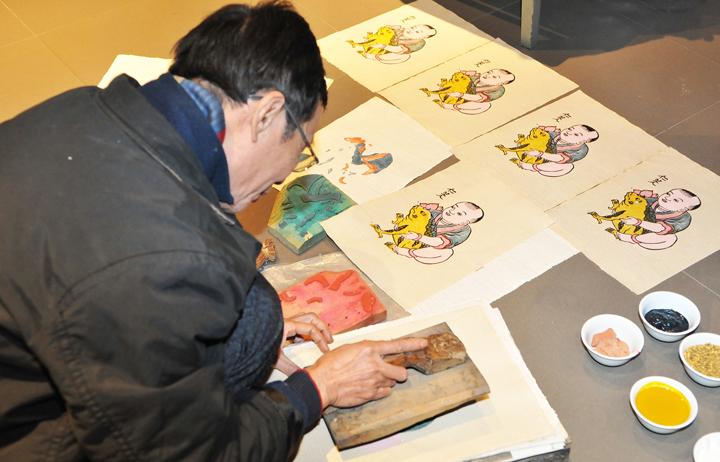
The brush meets paper. Stroke by stroke, careful, deliberate. The ink flows. The paper absorbs the meaning. In minutes, the wish becomes visible — black ink on red or yellow paper, ready to be taken home, as a blessing or a charm.
When ancient art meets modern breath
Calligraphy at Văn Miếu isn’t frozen in time. In recent years, the temple grounds have hosted creative exhibitions blending traditional calligraphy with modern art forms — for instance, a “Calligraphy–Graffiti Dialogue” where classic brushwork met street‑art energy.
This vibrant mix shows that calligraphy isn’t just nostalgia — it’s living culture. It evolves, adapts, and resonates with new generations while preserving its soul.
What the strokes carry — memory, hope, identity
For many Vietnamese, especially at the New Year or before important milestones, a piece of calligraphy is more than decoration. It’s a blessing, a symbolic wish for the future, a silent prayer. At Văn Miếu, people queue patiently — families, students, elders — waiting to receive their wish on paper, inscribed by the hands of a calligrapher.
For a traveler, accepting such a scroll is like holding a memory — a delicate link to Hanoi’s spirit, its history, its poetry.
Preserving the strokes for tomorrow
In a fast‑changing world, the art of brush and ink faces challenges. The rise of digital communication, modern scripts, and urban life make the slow rhythm of calligraphy seem old‑fashioned.
But at Văn Miếu, hope remains. Regular festivals, cultural events, exhibitions, and a growing interest — even among young people and foreigners — keep the tradition alive. With each scroll, each brushstroke, a piece of heritage endures.
When the brush stops — the memory remains
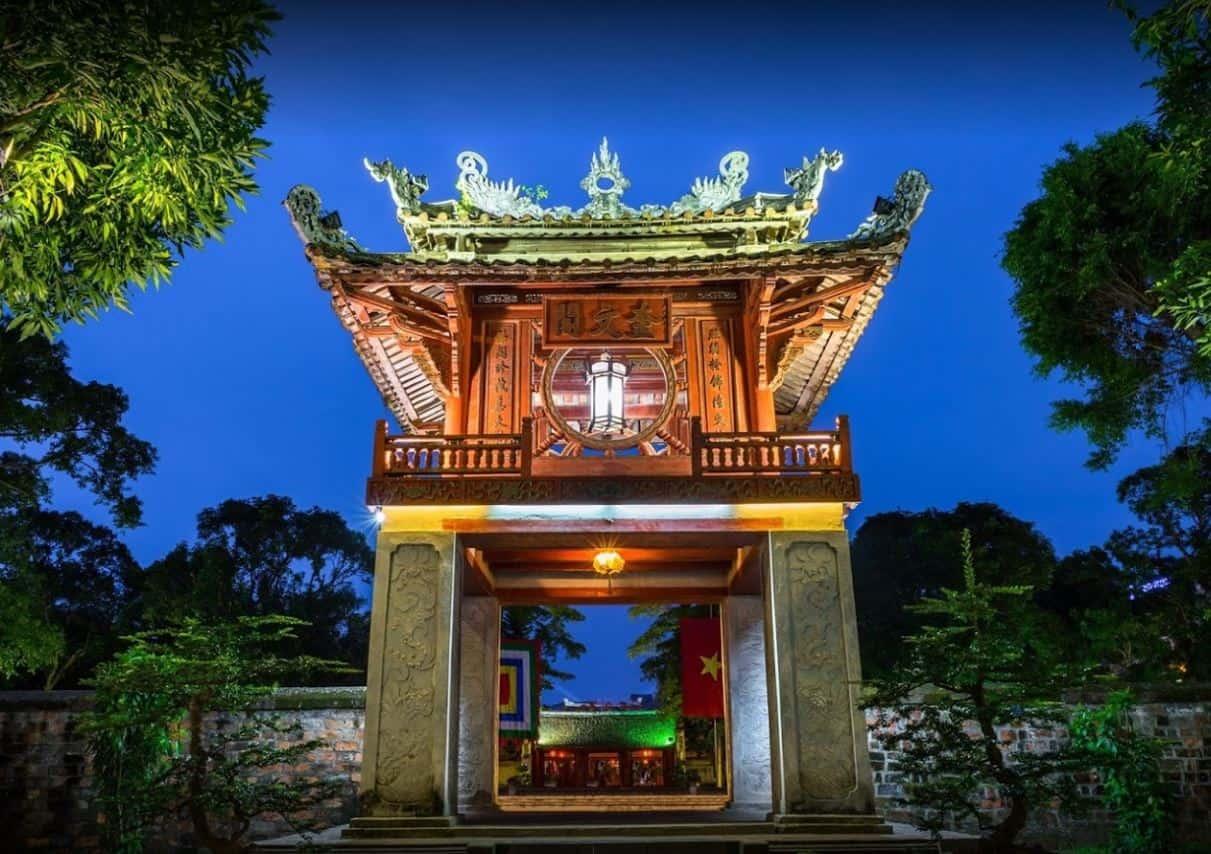
If you ever walk through Văn Miếu at sunrise, or visit during the calligraphy festival, pause. Watch the steady hand dip the brush, watch the ink spread, the paper drink it in. Feel the quiet reverence for letters, for history, for wishes.
Because in every stroke lies a bridge — between generations, between Earthy Travel readers and the soul of Hanoi, between past and future.
Take home a scroll, and you carry a piece of that bridge.