



Table of Contents
Before most of Hanoi wakes up, the streets already belong to someone else.
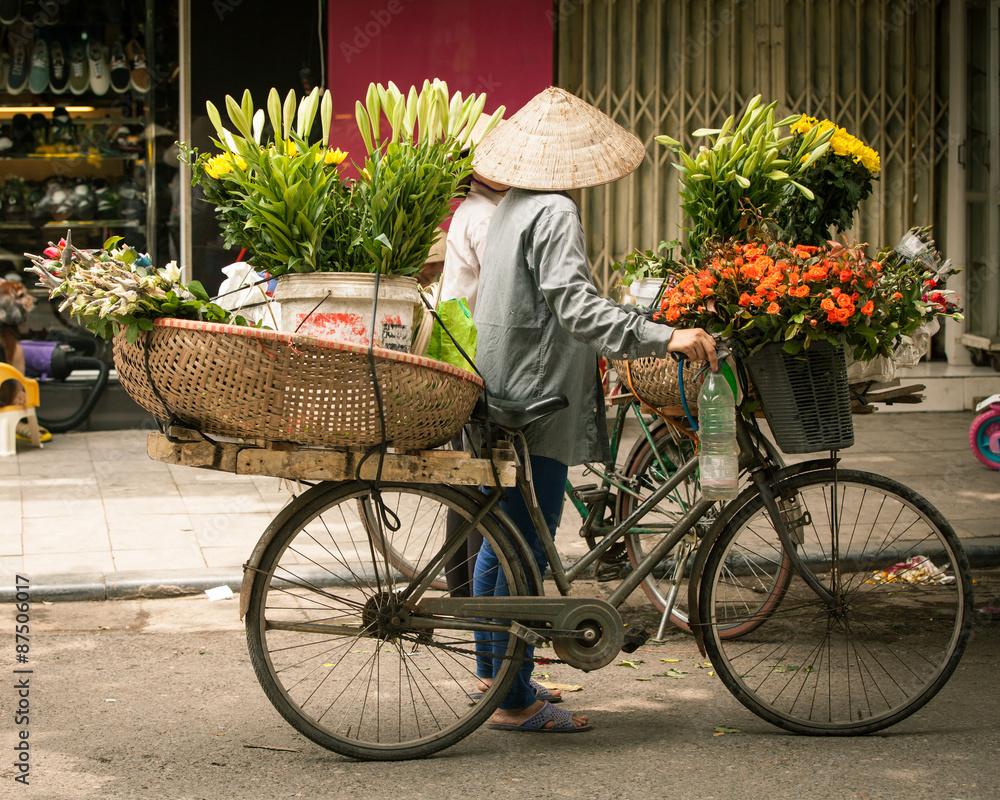
At 4:30 a.m., when the sky is still a soft, uncertain blue, a woman pushes her cart through a narrow alley in the Old Quarter. The city is quiet, but not asleep. Somewhere nearby, a motorbike coughs to life. A shopkeeper lifts a metal shutter halfway. The smell of boiled bones and fresh herbs begins to drift into the air.
This is the beginning of a normal workday for a Hanoi street vendor — a life most visitors photograph, but few truly see.
4:30 AM — The Market Comes First
No vendor starts the day at their stall.
The day begins at the wholesale market — Long Biên, Đồng Xuân, or a smaller neighborhood wet market depending on what they sell. Vendors arrive early to secure the freshest ingredients at the lowest price. Vegetables are still damp from the fields. Chickens are sold whole. Herbs are bundled quickly, weighed by hand, paid in cash.
There is no time for indecision. Prices change by the hour. A delay can mean smaller profit later.
By 5:30 a.m., purchases are tied onto baskets, loaded into carts, or balanced on the back of motorbikes. The city is waking up, and so is competition.
6:00 AM — Setting Up on Borrowed Space
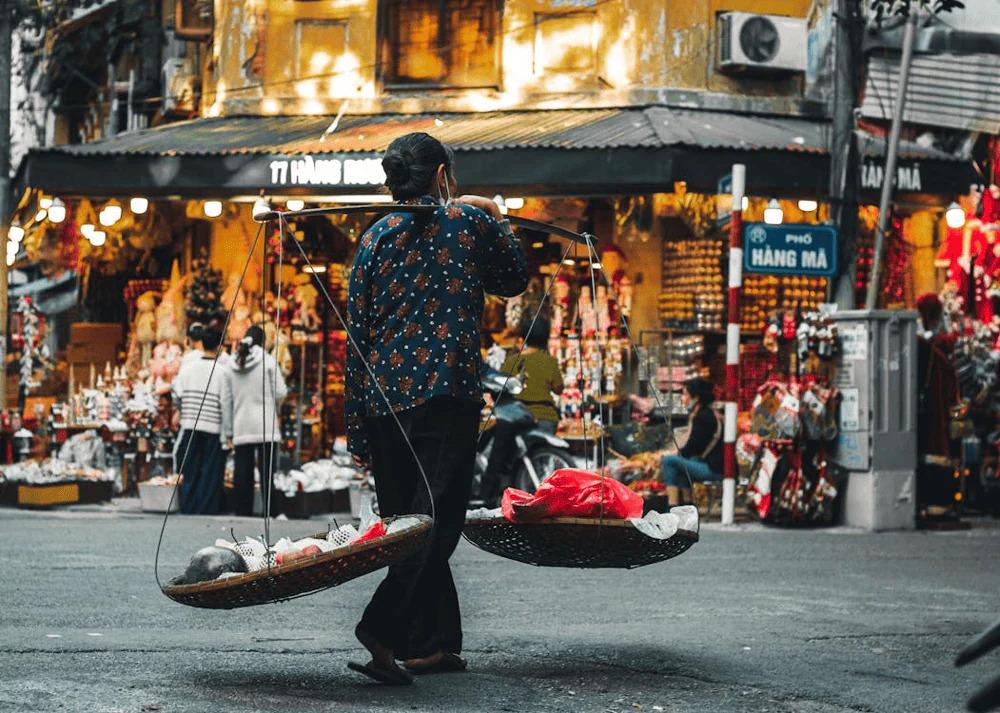
Hanoi street vendors do not own their workplace.
A sidewalk. A street corner. A spot under a tree. A patch of pavement that becomes “theirs” by habit, not by law. Plastic stools are stacked and unstacked. A small gas burner is tested. Bowls are rinsed with water carried from home.
There is an unspoken agreement between vendors, shop owners, and neighbors. Everyone knows where everyone belongs — until construction, police patrols, or complaints change everything.
Nothing here is permanent. That is part of the skill.
7:00–9:00 AM — The Breakfast Rush
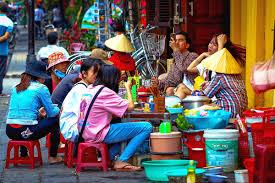
This is the golden window.
Office workers stop for breakfast before work. Construction workers eat fast and leave early. Elderly regulars arrive at the same time every morning, sit on the same stool, and order without speaking.
Bowls of phở, bún riêu, or xôi are prepared quickly, almost rhythmically. The vendor remembers who wants extra herbs, who avoids chili, who likes their broth lighter.
There is no written menu. No branding. Loyalty is built on consistency — taste, speed, familiarity.
By 9 a.m., the street feels different. The rush fades. Profit for the day is already half decided.
Mid-Morning — Waiting, Watching, Adjusting
Between 9:30 and 11:00 a.m., time stretches.
Some vendors pack up early if they sell breakfast only. Others wait — selling drinks, snacks, or small plates. A few customers linger, chatting. News travels by word of mouth: food prices, rent, family matters, rising electricity costs.
Vendors are always alert. A whistle from down the street can signal inspectors approaching. In seconds, stools disappear, pots are lifted, and carts are pushed away. This is not panic — it is practice.
12:00 PM — Lunch, Quickly
Lunch is rarely a real break.
If the vendor sells lunch food, this is another rush. If not, lunch might be leftovers eaten standing up, shared with another vendor, or skipped entirely. Time costs money.
During the hottest hours, the street slows. Vendors fan themselves, sit quietly, or lie back in hammocks tied to trees or poles. Hanoi rests, briefly.
Afternoon — Preparation All Over Again
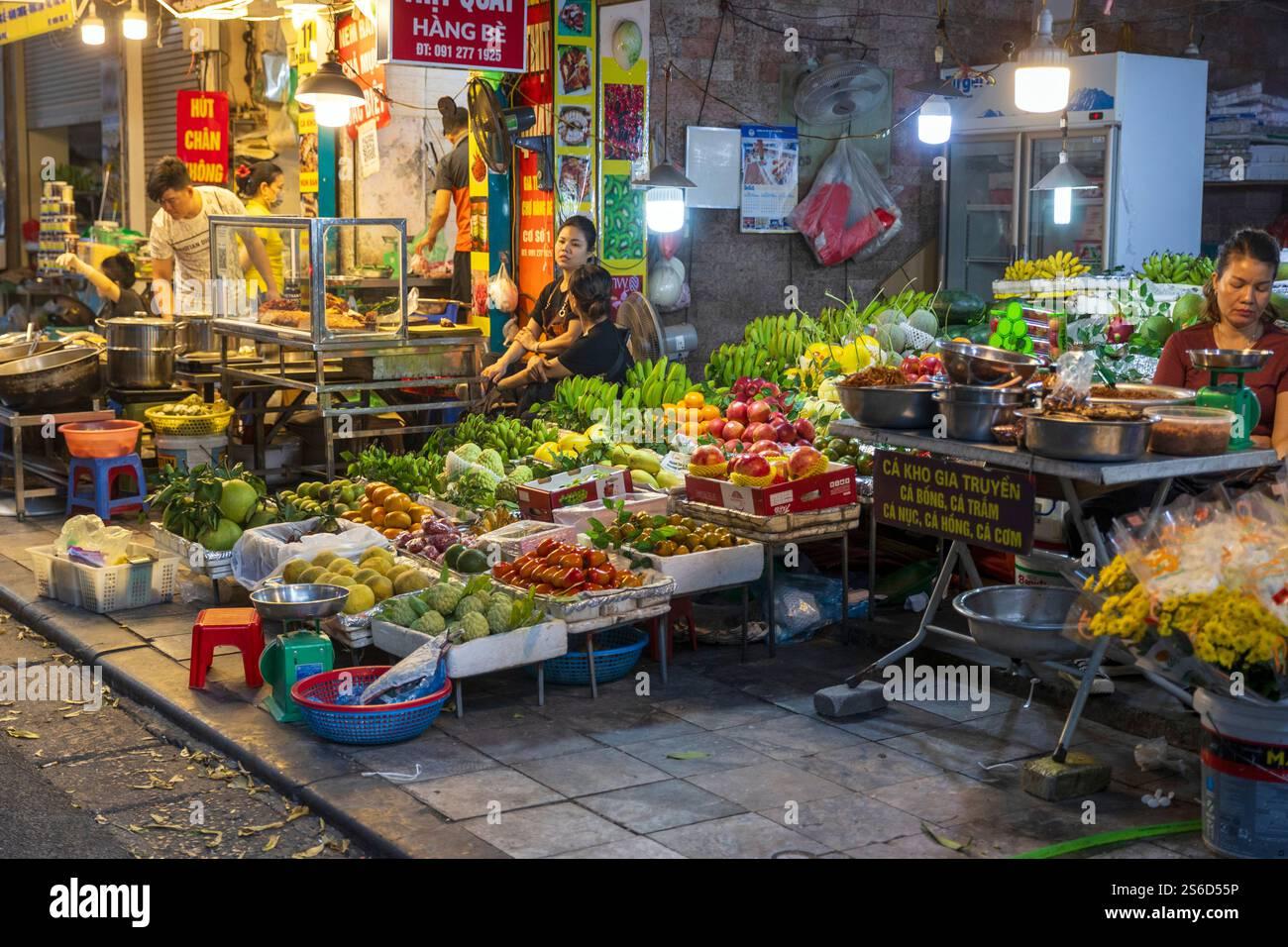
The afternoon is for cleaning, prepping, and planning.
Bones are washed. Broth is skimmed. Vegetables are sorted. Plastic bags are reused carefully. Everything must be ready for the evening crowd — or for the next morning.
Some vendors go home. Others stay nearby. Many live on the edge of the city, commuting daily. Their workday stretches beyond what customers ever see.
5:00–8:00 PM — The Evening Crowd
As offices close, the street comes alive again.
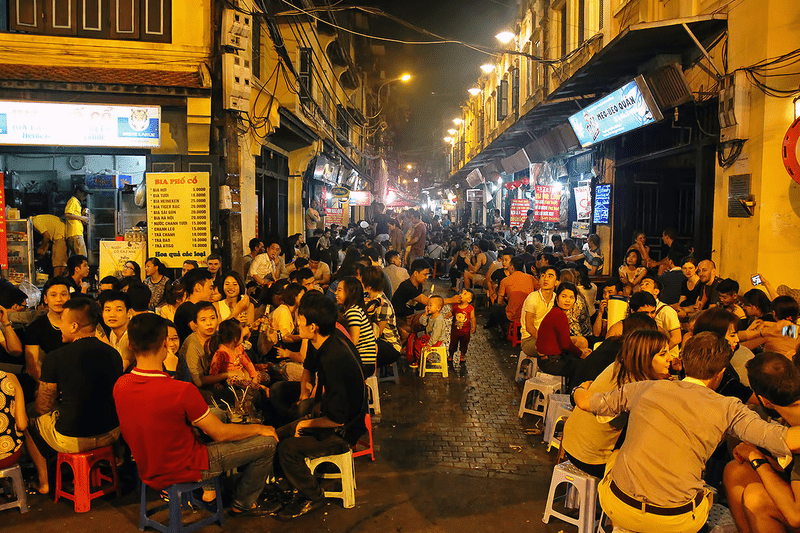
Students, families, delivery drivers, night workers. Evening customers are different — slower, more social. Plastic stools fill the sidewalk. Conversations grow louder. Smoke from grills mixes with the smell of traffic and incense from nearby altars.
This is when Hanoi feels most alive.
For vendors, it is the final push. Tired hands move automatically. Smiles are smaller now, but still there.
After Closing — Counting What’s Left
When the pots are empty or energy runs out, the stall disappears as quickly as it appeared.
Dishes are washed at home. Money is counted quietly. Expenses are calculated: ingredients, gas, rent, school fees. What remains is not always much — but it is enough to start again tomorrow.
There are no sick days. No paid holidays. Weather does not cancel work. Street vending is survival built on routine.
Why This Life Matters
Hanoi’s street vendors are not background scenery.
They feed the city. They preserve flavors passed down through generations. They create spaces where strangers sit side by side, sharing stools and stories.
Without them, Hanoi would still be beautiful — but it would lose its pulse.
So next time you sit down for a bowl of noodles on a low plastic stool, take a moment. Notice the hands that prepared it. The hours behind it. The life that unfolds before sunrise and long after you leave.
That is Hanoi. Quietly working. Every day.